Infrastructure becomes a business through the people and processes that can reliably use it.
The customer sees a purchase. The merchant sees an order. The operating team sees the work that has to happen next. GuardedPay’s product brief joined those perspectives into one designed experience.
Relationship
Venture / operating engagement
Period
2026 product and operating work
Stage / evidence
Brand, product architecture and operating design
Project focusMulti-party infrastructure
Customer, merchant and operating workflows.
ContributionProduct & operating design
Brand, experience, requirements and engineering coordination.
EvidenceOriginal delivery artifacts
Identity, frontend ecosystem brief and operating-design records.
Papers attached · source, period & limits
This case presents historical product and operating work. It does not offer a currently available processing service or claim regulatory approval, audited transaction volume or investor returns.
01 · The problem
The checkout was one part of the product.
A transaction creates work on more than one side. Customers need to understand the purchase and what follows. Merchants need a usable route into the platform and a clear view of activity. Internal teams need the information to support both. The product work had to make those responsibilities fit together.
02 · The decision
Map the experience by stakeholder.
The frontend ecosystem brief separated public information, the customer journey, the merchant portal and the internal dashboard. This gave the build a concrete set of surfaces and user states, with a defined purpose for each. Brand, copy and interface requirements could then be considered against the same operating picture.
03 · The work
Connect the visible promise to the operation.
The scope extended from identity and merchant onboarding to checkout, confirmation, customer communication and supporting workflows. Original brand applications established the visual system; the product brief set out how the experience should behave. The important design question was what each participant needed to understand and what the team needed to do next.
04 · The commercial lesson
Trust has to survive the handoff.
A coherent interface is only useful when it matches the service behind it. This case demonstrates the work of defining an infrastructure product across customer, merchant and operator perspectives. It is presented as product and operating work; the artifacts do not establish current payment availability or investment performance.
The decision, made visible
Before. The move. After.
Explanatory reconstruction of the documented design decision; not a live system diagram.
01Starting condition
One transaction, several different information needs.
02The intervention
Design public, customer, merchant and internal surfaces together.
03Resulting design / evidence
A defined product scope connecting each audience to its next action.
The work, inspectable
The artifacts behind the account.
Each artifact is labelled for what it is: an original, a historical report, or our reconstruction.
The same identity carries from the first introduction into the supporting business materials.
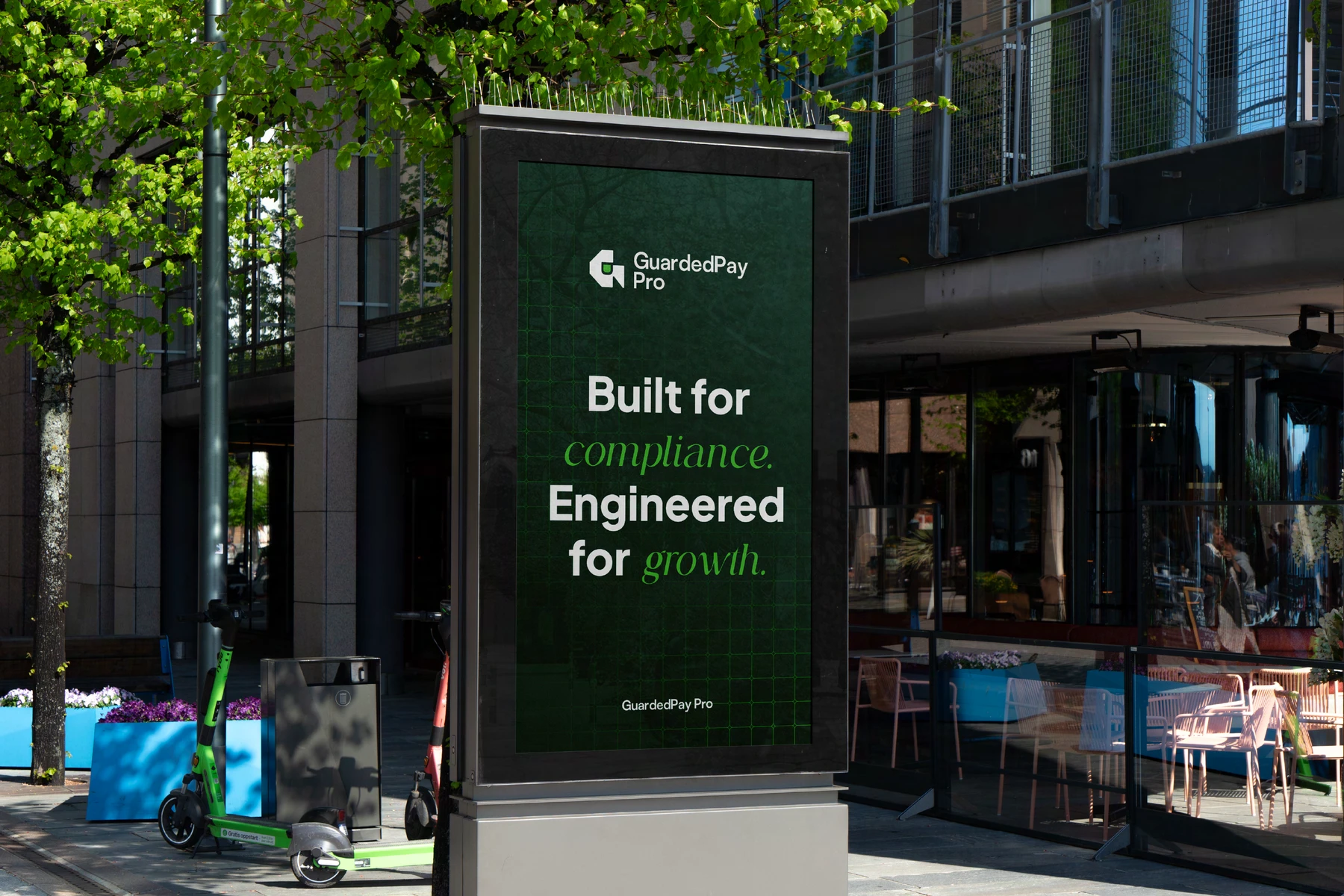
Original GuardedPay Pro brand application. Concept mockup; not evidence of a physical advertising placement.Explanatory reconstruction
The experience has several owners.
A public explanation has to connect to customer understanding, merchant activity and the team responsible for service.
Simplified editorial reconstruction of the documented product scope. Sensitive operating details are omitted.
What the work establishes
A product defined beyond its checkout.
The retained work establishes a brand system, a documented multi-stakeholder frontend and an operating-design scope around it. It shows how a financial-infrastructure proposition was translated into a product people could understand and a build team could execute against.